

Essential Road Cycling Spares for Every Ride
A flat tyre ten miles from home is inconvenient. A flat tyre on a wet club ride, with fading light and no workable repair kit, can end the day. Essential road cycling spares are not about carrying a miniature workshop in your jersey pocket. They are the compact, dependable items that turn a roadside problem into a short stop.
For most road riders, the right setup fits in a saddle bag or tool wrap, adds little weight and covers the failures most likely to happen away from home. The key is compatibility. A brilliant CO2 inflator is no help with the wrong cartridge thread, and a spare tube is useless if it does not fit your tyre and valve depth.
Essential Road Cycling Spares: Start With Punctures
Punctures remain the most common reason for an unplanned stop. Whether you run standard inner tubes, TPU tubes or a tubeless setup, your repair system needs to address both the immediate problem and the reason it happened.
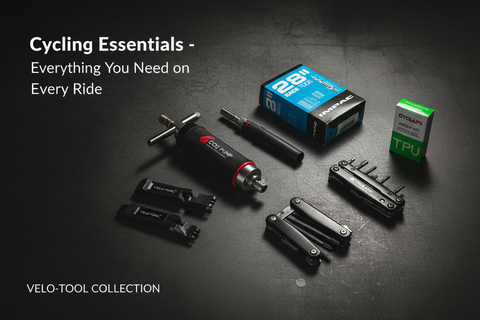
For riders using inner tubes, carry one spare tube as a minimum, plus tyre levers and a reliable inflation method. A second tube makes sense for long rides, remote routes, winter miles and events where getting moving quickly matters. Check the tube matches your wheel diameter and tyre-width range, then choose a Presta valve long enough for your rims. Deep-section wheels often need 60 mm or longer valves, or a valve extender.
TPU inner tubes are particularly useful when space and weight are priorities. They pack down very small, making it realistic to carry two without filling your saddle bag. They do require careful fitting: avoid trapping the tube beneath the tyre bead, and follow the tube manufacturer's inflation guidance. Their compact size is a performance advantage, not a reason to rush installation. Explore our RideNow Ultra Light TPU Inner Tubes, checking wheel, tyre and brake compatibility before choosing.
Tyre levers should be strong enough to deal with a tight road tyre but shaped to protect the rim and tube. Metal levers can be effective on stubborn beads, yet they can mark alloy rims and damage carbon rim tape if used carelessly. A quality pair of compact polymer levers is the sensible everyday choice.
Before fitting a fresh tube, run your fingers carefully around the inside of the tyre to find any embedded flint, wire or glass. Do this slowly and cautiously. If the object remains in the tyre, the replacement tube may puncture as soon as you inflate it.
Inflation: CO2, Mini Pump or Both?
A CNC aluminium CO2 inflator and cartridge are the fastest way to restore road-tyre pressure at the roadside. This matters in cold rain, during a group ride or when a tight tyre has demanded more effort than expected. Choose a threaded inflator with controlled valve operation, rather than relying on a basic cartridge head that can release gas too quickly.
CO2 has limitations. One cartridge is generally enough for a single road tyre, but tyre volume, cartridge size and operator error all affect the result. Carrying two CO2 cartridges gives useful redundancy, especially on longer rides. Remember that the cartridge becomes extremely cold during use, so an insulated sleeve or a carefully designed inflator body is worthwhile.
A mini pump is slower but never runs empty. It is the better standalone choice for touring, commuting and rides through areas where a taxi or train home is not an easy option. A compact high-pressure pump with a secure Presta connection can inflate a road tyre effectively, although it takes patience. Many experienced riders carry both: CO2 for speed, with a mini pump as the fail-safe on big days.
Tubeless riders need a slightly different plan. Carry a tubeless plug kit for small holes that sealant cannot close, plus a spare tube for cuts or damaged beads that defeat the system. Our Tubeless Tyre Repair Tool with 5 Strips is an option for your plug kit. A small valve-core tool is valuable too. Removing the core can improve airflow when inflating a stubborn tubeless tyre, while a replacement core solves the surprisingly common problem of a bent, clogged or leaking valve.
The Small Spares That Prevent a Long Walk
A puncture kit is the foundation, but several small items can rescue a ride when the failure is elsewhere. These are light enough to justify carrying, provided they suit your bike.
A quick link matched to your chain speed is one of the best-value additions to a road ride kit. Chains can break after a hard shift under load, a crash or accumulated wear. The quick link alone is not enough, however. You need a compact chain tool capable of driving out a chain pin. Practise using it at home once, rather than learning with cold hands beside a busy road.
A compact multi-tool covers loose bolts on stems, saddle clamps, bottle cages and cleats. Look for precisely machined hex keys that fit securely rather than rounding fasteners. If your bike uses Torx bolts, include the correct size, commonly T25. A tool with a chain breaker is efficient, but check it works with your drivetrain before relying on it.
A short section of tough material, often called a tyre boot, can temporarily reinforce a cut tyre from the inside. It is not a permanent repair, but it may get you home when a sidewall slash makes a tube bulge through the casing. A purpose-made boot is compact and dependable; a folded energy-bar wrapper can work in an emergency but is a second-best option.
Finally, carry a small amount of cash or a payment card, a charged mobile phone and identification. They are not cycling spares in the technical sense, but self-sufficiency also means having a realistic recovery plan when a damaged wheel, broken derailleur or crash cannot be repaired at the kerbside.
Build Your Kit Around Your Ride
There is no single perfect saddle-bag inventory. A one-hour loop near home needs less than an all-day sportive across exposed lanes. The aim is to match your kit to the consequences of a mechanical.
For short training rides, a spare tube, levers, inflation, multi-tool and phone are usually enough. Add a quick link if you ride a modern drivetrain or regularly train alone. For winter riding, increase redundancy: two tubes or a tube and patches, two CO2 cartridges, a tyre boot and a chain tool are sensible when debris and poor road surfaces raise puncture risk.
On long-distance rides, sportives and holidays, carry tools that match your bike's specific components. This could mean a disc-brake pad spacer, a spare derailleur hanger, valve extenders or a small packet of sealant. A hanger is especially worth considering for electronic shifting and carbon frames, where a minor impact can leave the rear derailleur misaligned or unusable. It is bike-specific, so confirm the correct part number before packing one.
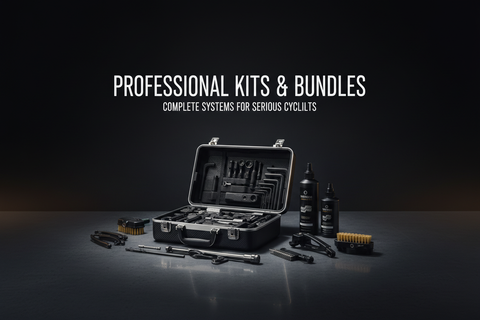
Do not confuse a bigger kit with better preparation. Heavy adjustable tools, duplicate Allen keys and unrelated workshop equipment make roadside repairs harder to organise. A compact professional-grade kit works because every item has a job and can be reached quickly.
Check Compatibility Before You Need It
Set aside ten minutes before a major ride to inspect what you carry. Confirm that CO2 cartridges fit your inflator, your spare tube has the correct valve, and the multi-tool reaches awkward bolts on your frame. Make sure a quick link is compatible with your chain's speed and direction requirements.
Inflation is worth testing too. Practise fitting the inflator to a spare wheel, understand how the valve head operates and know your approximate riding pressure. Road tyres vary widely: a 28 mm tyre may run comfortably at a much lower pressure than a 23 mm tyre, while rider weight, rim width and road conditions all change the ideal figure. Inflating every tyre to the maximum sidewall number is rarely the best approach.
Replace consumables after use. A used CO2 cartridge does not belong back in the saddle bag, and a patched tube should be inspected before it becomes your only spare. Keep cartridges dry, check tyre levers for cracks and replace rusty multi-tools before their pivots seize. Waterproof tool storage helps protect small precision tools through British winter weather.
Velo-Tool's approach is simple: choose compact, dependable equipment that gives you a proper response to the problem, not a hopeful improvisation. A complete repair bundle can be a strong starting point, then you can refine it around your tyres, wheels and typical rides. For a tube-and-patch starting point, explore our TPU Tube Repair Bundle and add the other essentials your ride needs.
Pack your spares once, check them regularly and use them before an emergency forces the lesson. The best roadside repair is rarely dramatic - it is a calm ten-minute pause followed by getting back on the road.


Post Comment