


Commuter Bike Multitools That Earn Their Place
A loose mudguard stay outside the station, a slipping saddle halfway through a wet commute, or a chain that refuses to settle after a pothole: these are the jobs commuter bike multitools are made for. The best one is not necessarily the tool with the highest number of functions. It is the compact, well-built tool that matches your bike’s fittings, stays usable with cold hands and gets you moving again without adding unwanted weight to your bag.
For daily riders, a multitool is a piece of emergency equipment, not a miniature workshop. Choose it with the same care you would give a pump, puncture kit or lights. A precise tool can turn a five-minute roadside adjustment into exactly that. A poorly chosen one can round a bolt, frustrate a repair and leave you calling for a lift.
What commuter bike multitools need to do
A commuter’s bike sees a particular kind of use. It may spend the day locked outside, ride through grit and rain, carry panniers, and cover the same imperfect roads often enough for small adjustments to reveal themselves quickly. Your multitool should deal with those predictable issues: tightening bolts, aligning a slipped accessory, adjusting a saddle position, securing a bottle cage and, where appropriate, repairing a broken chain.
Start by checking the fasteners actually fitted to your bike and accessories. Most commuter bike multitools should include 3mm, 4mm, 5mm and 6mm hex keys. A 2mm or 2.5mm key is useful for some mudguards, lights and shifters, while an 8mm key can matter on certain pedals or crank bolts, although its usefulness depends entirely on the bike.
A T25 Torx key is increasingly worthwhile. It is the usual fitting for six-bolt disc rotor bolts and appears on some accessories. If your bike has hydraulic disc brakes, use the Torx bit only where required and keep it away from the rotor’s braking surface. Oil from fingers or tools is not a helpful addition to a wet-weather commute.
A chain tool is a major dividing line. If you ride further from home, rely on your bike for work, or have a route with poor public-transport options, it earns its place. It must be compatible with your chain speed, and it should be paired with the correct quick link. A chain tool can push a pin or help remove a damaged link, but it cannot safely repair every chain failure. Modern chains are often intended to be reconnected with a specific joining link, so carry one that matches your drivetrain.
The functions that matter most
Bit count is easy to market. Fit, leverage and material quality matter more when you are beside a busy road in the rain. Professional-grade steel keys resist rounding, while a CNC aluminium body can keep the package light without making the tool feel flimsy. The folding pivots should be firm enough that a key does not swing away under pressure, but not so tight that you need two hands to open it.
The hex keys need enough length to reach recessed bolts and enough clearance around the body to turn freely. This is easy to overlook. Some very compact multitools look excellent in a pocket but clash with saddle clamps, rack fittings or mudguard brackets before the key has made a full turn. For a commuter setup, a few extra grams are usually a fair trade for usable leverage.
Screwdrivers can be useful for a light bracket, derailleur limit screw or older accessory fitting, but they are secondary to good hex keys. Spoke keys are similar. They can help in a genuine emergency, yet wheel truing is a skilled adjustment and an overtightened spoke can make a wheel worse. Carry one only if it fits your wheel’s nipples and you know how to make a small corrective turn.
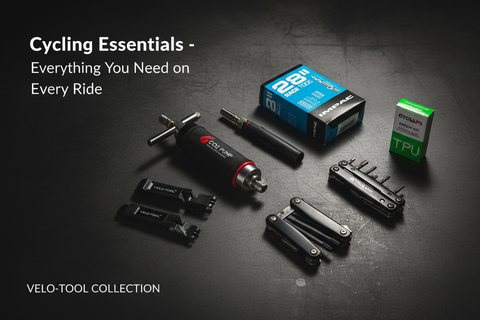
Knife blades, tyre levers and integrated CO2 inflators may make a multitool look more complete, but combining every repair item into one unit has compromises. A separate pair of strong tyre levers is easier to use on a tight tyre, and a dedicated CNC aluminium CO2 inflator gives more control when fitting a cartridge. Build a system around the multitool rather than asking it to do every job.
Match the tool to your commuting bike
The right setup changes with the bike and journey. A short urban ride on a simple single-speed bike may only need quality 4mm, 5mm and 6mm hex keys, plus the essentials for a puncture. A geared hybrid with rack, mudguards and disc brakes benefits from a wider hex range, T25 Torx and a chain tool. On an e-bike, consult the manufacturer before touching motor, battery or high-torque drivetrain fittings, and do not assume a pocket tool is suitable for every fastener.
Road-style commuters often reward a slim tool with precise bits, particularly when luggage space is limited. Gravel and all-weather bikes tend to carry more accessories and encounter rougher surfaces, making chain capability and longer keys more valuable. If you use a trailer, panniers or a child seat, inspect their attachment bolts separately. Some need specific tools or torque values that should be checked at home, not guessed at during a commute.
That last point matters. A multitool is suitable for a minor roadside correction, such as re-centering a saddle or snugging a loose cage bolt. It is not a replacement for a calibrated torque system. Stem, handlebar, seatpost and carbon-component bolts have manufacturer torque specifications for a reason. Overtightening can damage expensive parts, while undertightening can create a safety issue. Use the multitool to get home if necessary, then check the fitting properly with a torque tool.
Carry a complete roadside repair system
The multitool is the centre of a practical repair kit, but it is only one part of it. For most UK commuters, the useful companion items are a reliable inflation method, two tyre levers, a spare inner tube or puncture patches, and a quick link if the multitool includes a chain breaker. Tubeless riders should add plugs, a plug insertion tool and enough sealant support for their tyre system.
CO2 is fast and exceptionally compact, especially for riders who want a clean pocket or small saddle bag. It is less forgiving than a mini pump: a cartridge is single-use, and a mistake can leave you without inflation. A compact pump takes longer but provides repeatable air and is often the better choice for long commutes, lower-pressure gravel tyres or riders who prefer not to carry cartridges. Many regular commuters choose a small electric or mini pump and reserve CO2 for a rapid backup.
Keep the kit in a waterproof tool storage pouch rather than loose in a pannier. Water, road salt and grit can corrode chain tools, clog bit interfaces and turn a simple repair into a frustrating one. Once a month, open the pouch, dry the tools, check the pump or inflator, and replace used patches, cartridges or sealant supplies. A repair kit is only dependable when it is complete.
Velo-Tool’s approach of building ride-ready kits is useful here: select equipment by the failure you need to solve, rather than buying tools one at a time because they look clever. A compact multitool, dependable inflation option and puncture equipment cover far more real commuting problems than an oversized collection of rarely used bits.
How to use a multitool without damaging your bike
Before turning anything, make sure the bit is fully seated in the bolt. Hold the tool square to the fitting and apply steady pressure. If a bolt will not move easily, do not force a short multitool sideways or use a key at an angle for extra leverage. That is how bolt heads round off. A seized fitting needs the right workshop treatment, often including cleaning, penetrating fluid or a longer handled tool.
For roadside tightening, make small changes and test the result. If a saddle has slipped, reset its angle and height before gently securing it. If a mudguard rubs, look for the source of the movement instead of simply tightening every bolt in sight. A loose stay, bent bracket or displaced washer may be the real problem.
After using a chain tool, rotate the cranks by hand before riding away. Check that the repaired section moves freely through the rear derailleur and does not have a stiff link. If you have fitted a quick link, make sure it is fully engaged according to its design. A few careful seconds beside the road are better than a second failure under power.
Buy for the ride you actually make
A commuter multitool should be light enough that you carry it every day and capable enough that it earns that space when something loosens. Prioritise the correct hex keys, a dependable T25 bit where your bike needs one, and a chain tool only when you will carry the matching quick link. Then protect it in a waterproof pouch alongside the puncture and inflation equipment your tyres require.
The best test is simple: lay out your repair kit before tomorrow’s ride and imagine a puncture, a loose saddle and a broken chain. If each problem has a practical answer, you can leave home with more confidence and spend less time stranded at the kerb.


Post Comment