


CO2 Pump Comparison for Faster Roadside Fixes
A puncture is rarely difficult because the tyre will not inflate. It is difficult because you are at the roadside, losing daylight, hands are cold and a group ride is waiting. This CO2 pump comparison focuses on the details that decide whether an inflator gets you rolling quickly or becomes another awkward item at the bottom of a saddle bag.
Strictly speaking, a CO2 inflator is not a pump. It uses a single-use cartridge of compressed carbon dioxide rather than moving air with a piston. Yet most riders search for a CO2 pump because the job is the same: reinflate a repaired tyre fast enough to finish the ride. For compact puncture preparedness, the speed-to-size advantage is difficult to beat.
CO2 pump comparison: what actually matters
The best choice is not automatically the smallest or the lightest. An inflator must fit your valve, work predictably under pressure and be easy to operate when a repair has already cost you ten minutes. Cartridge size, valve-head design and gas control matter more than decorative features.
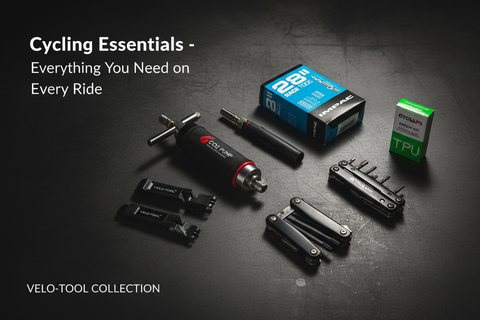
A compact CNC aluminium inflator with a threaded connection is a strong starting point for road, gravel and mountain bike riders. Aluminium keeps weight low while coping well with repeated use, and a precise threaded interface reduces the chance of an accidental discharge. It also makes a practical companion to tyre levers, a tube or tubeless repair kit and a multi-tool in a complete roadside bundle.
Inflator head: threaded control versus basic speed
The cartridge connection is the first major difference. A threaded inflator accepts threaded cartridges and screws on securely. This is the more controlled arrangement, particularly when you are carrying equipment in a tight saddle bag or tool case. The head stays attached while you position the valve, rather than relying on hand pressure against a punctured cartridge.
Some simple inflators pierce the cartridge as it is tightened and release gas as soon as the valve is engaged. They can be very small and very quick, but they offer less room for correction. If the head is not fully seated on the valve, or the valve core is loose, a meaningful portion of your only cartridge can disappear before the tyre has enough pressure.
Regulated or trigger-operated heads cost a little more and add a little bulk, but give a clear performance advantage. They let you start and stop the gas flow, check how the tyre is taking shape and avoid overfilling. That control is particularly valuable with narrow road tyres, TPU inner tubes and tubeless setups where you may need a deliberate burst of air to seat a bead, followed by a pressure check.
Presta compatibility is essential for most performance bikes
Most road, gravel and modern mountain bikes in the UK use Presta valves. Choose an inflator designed to seal securely to Presta, not one that merely claims broad compatibility without explaining its connection. A threaded-on valve head is usually more secure than a push-on fitting, especially with a short valve stem or a wheel that is difficult to hold steady.
If you run Schrader valves on a commuter, hybrid or children’s bike, confirm that the inflator supports them directly or that the appropriate adaptor is included. Do not assume a tiny brass adaptor will be available when you need it. Compatibility belongs in the puncture kit from the beginning.
Cartridge size changes the result
Cartridges are commonly available in 16g and 25g formats. The number refers to the weight of CO2 inside, not the size of the metal cartridge itself. Both can be useful, but they suit different tyres and riding priorities.
A 16g cartridge is the compact standard for many road cyclists. It is light, easy to pack and generally provides enough gas to get a typical 25-32mm road tyre to a workable ride-home pressure. The exact result changes with tyre volume, temperature and how much gas escapes during fitting, so treat it as emergency inflation rather than laboratory precision.
A 25g cartridge carries more gas and better suits higher-volume gravel, mountain bike and touring tyres. It is also sensible for riders using 40mm-plus tyres, where a 16g cartridge can leave pressure disappointingly low. The trade-off is obvious: 25g cartridges take more space and add weight. For a short road ride, that extra capacity may be unnecessary. For a long off-road day with tubeless tyres, it can be the difference between a temporary repair and a walk.
Carrying two 16g cartridges is often more versatile than carrying one alone. You have a second attempt if a sealant plug needs extra air, a valve leaks or another rider has a puncture. The most suitable setup depends on your tyre volume and how far you may be from a shop, station or support vehicle.
Speed is the CO2 advantage, but it has limits
CO2 inflators fill a tyre in seconds. That is their defining benefit over a mini pump, particularly after fitting a tight tyre or when poor weather makes a longer roadside stop unpleasant. A compact inflator and cartridge can also take up far less room than even a high-quality mini pump.
The limitation is that each cartridge is one use. Once it has discharged, it is spent. A mini pump is slower but repeatable, which makes it better for multi-day touring, commuting where you may be caught out twice, or any ride where self-sufficiency matters more than speed.
For many riders, the strongest answer is not choosing one over the other. A CO2 inflator offers rapid emergency inflation, while a compact mini pump provides backup. On longer rides, that combination gives useful insurance without turning your pocket or frame bag into a workshop.
CO2 also seeps through butyl inner tubes faster than ordinary air. You may finish the ride without issue, but the repaired tyre should be checked and reinflated with normal air once you are home. With tubeless systems, consult the sealant manufacturer before using CO2 regularly, as some sealants can react differently to CO2 or dry out sooner. One emergency use is different from making cartridges your everyday inflation method.
Cold cartridges and safe handling
As gas leaves a CO2 cartridge, the metal becomes extremely cold. Bare fingers can stick to the cartridge or suffer a cold burn, especially if you are using a large cartridge or releasing gas slowly. A protective neoprene sleeve, cartridge cover or insulated glove makes the job more comfortable and reduces risk.
Hold the wheel securely, connect the inflator squarely and keep your face away from the valve while inflating. If you use a removable-core Presta valve, ensure the core is snug before fitting the head. A loose core is one of the simplest ways to waste a cartridge and create a second repair at the roadside.
Cartridges should be carried where they cannot rattle against sharp tools or be exposed to excessive heat. Once empty, steel cartridges can usually enter metal recycling where local council guidance permits, but first make certain they are fully discharged. Never puncture, crush or burn one.
Which setup suits your riding?
For road riding, a compact threaded CNC aluminium inflator, two 16g threaded cartridges, tyre levers and a spare tube form a focused, low-weight solution. A controllable head is worthwhile if you use high-pressure tyres and want less chance of wasting gas.
For gravel, choose the same quality of head but consider a 25g cartridge or two 16g cartridges, depending on tyre width. Include tubeless plugs and a valve-core tool if you ride tubeless. Gravel routes can be remote, so redundancy deserves priority over shaving a few grams.
For mountain biking, a 25g cartridge has a clearer case because tyre volumes are larger and tubeless repairs are common. A rapid burst of gas may help reseat a bead after a trailside repair, although a mini pump remains valuable if you need more air than one cartridge can provide. Riders tackling rocky, technical trails should protect the cartridge in a secure pouch or waterproof tool storage rather than leave it loose in a pocket.
For commuting and leisure riding, simplicity wins. A reliable threaded inflator with compatible cartridges is easy to carry and far more practical than no inflation option at all. Pair it with a puncture repair kit or spare tube that matches your wheel size, and practise once at home. Familiarity turns a roadside repair from a disruption into a short stop.
Velo-Tool’s approach is to make that preparation straightforward: select professional-grade inflation equipment around the bike you actually ride, then keep it together as a complete, ready-to-use repair system.
Before your next ride, check the valve type, tyre width and cartridge thread on your current setup. A CO2 inflator only earns its place when every part is compatible, accessible and ready to work the first time.


Post Comment