


Bike Pumps That Match Your Ride and Tyres
A soft rear tyre at the start of a Sunday road ride is irritating. A flat tyre six miles into a wet trail loop can end the day. The right bike pumps turn both moments into a quick, controlled fix, whether you are setting accurate pressure in the garage or getting moving again at the roadside. The best choice is not simply the smallest or highest-pressure option. It is the pump that suits your tyres, valves, riding style and the space you can spare.
Why pressure capability is only part of the job
Every pump moves air, but it does not move it at the same rate or with the same effort. Narrow road tyres need relatively little air volume but often run at higher pressures. A compact pump built for high pressure can therefore be effective, though it may take a few minutes of steady pumping after a puncture.
Mountain bike and gravel tyres reverse the priority. Their larger volume means you need to shift more air, while their normal pressures are lower. A high-volume pump fills these tyres faster and makes more practical sense trailside, even if its maximum pressure figure is modest. Trying to inflate a 2.4-inch MTB tyre with a tiny high-pressure mini pump is possible, but it is not a performance-focused solution.
At home, a stable floor pump remains the most efficient option for almost every rider. Its long barrel, secure base and hose-mounted head make it easier to reach target pressure without fighting the valve. For regular maintenance, that accuracy helps tyres roll predictably, grip consistently and resist avoidable pinch punctures.
The main types of bike pumps
Floor pumps for home set-up
A quality floor pump is workshop equipment that earns its place in even the smallest shed or flat. Look for a solid base, a readable gauge and a pump head that locks securely onto Presta and Schrader valves. Metal components matter here: a durable barrel and handle tolerate frequent use far better than lightweight plastic when you are checking pressures week after week.
For road, commuter and hybrid bikes, choose a model with enough pressure headroom to work comfortably above your usual setting. The printed maximum is not your target - it is useful capacity. For MTB riders, a high-volume floor pump will reduce the number of strokes and make tyre changes less of a chore.
A gauge is helpful, but treat it as a guide rather than laboratory equipment. If you tune tyre pressure closely for racing, wet conditions or tubeless performance, a separate digital gauge can offer greater consistency. The trade-off is another small tool to store.
Mini pumps for the roadside
Mini bike pumps are the dependable no-consumables option. They work whenever you need them, are permitted on flights when packed appropriately subject to airline rules, and can inflate a replacement tube from completely flat. They also provide the backup that a CO2-only set-up does not.
Their compromise is time and effort. A genuinely compact pump will not restore a large tyre instantly, and reaching a road tyre's preferred pressure can be demanding after a long ride. That does not make it the wrong tool. It makes it an emergency tool designed around reliability and portability.
A good mini pump should mount securely to the frame or disappear into a jersey pocket, yet feel rigid in the hand. CNC aluminium construction is particularly valuable in a compact format, giving the pump a precise, hard-wearing feel without adding unnecessary bulk. Check the stated compatibility before buying: some pumps are optimised for high pressure, others for high volume, and a few aim to balance both.
For a compact high-pressure option, explore the Mini Bike Pump 300PSI - High Pressure Portable Pump 90g.
Electric pumps for fast, repeatable inflation
Portable electric pumps have become a compelling option for riders who value speed and repeatable pressure. Set the target, connect the hose or valve adaptor, and the pump stops at the chosen pressure on compatible models. That is useful before a ride, at an event, or when several bikes need checking without reaching for a full-size pump.
They are especially convenient for riders with limited hand strength and for anyone who wants a compact tool that removes the physical effort of inflation. Battery level is the obvious consideration. Recharge after use, avoid leaving the unit flat for long periods, and carry a manual or CO2 backup on bigger rides where self-sufficiency matters.
Electric pumps also generate heat during operation, particularly at higher pressures. Use them as intended and allow the unit to cool between repeated inflations. They are precision-minded tools, not an excuse to neglect basic tyre checks.
CO2 inflators for rapid recovery
A CO2 inflator with threaded cartridges is the fastest compact answer to a roadside puncture. It can seat a tyre and restore riding pressure in seconds, which is why it remains a favourite among road riders, racers and cyclists carrying minimal kit. A CNC aluminium inflator gives a secure connection and controlled gas flow, helping prevent frozen fingers, damaged valves and accidentally empty cartridges.
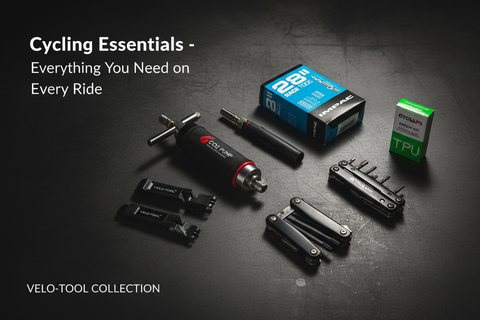
Explore the VELO-TOOL CO2 Bike Pump Black Edition - Premium CNC Aluminium Inflator for your ride kit.
The limitation is simple: each cartridge is single-use. Carrying one cartridge is not the same as carrying a full inflation strategy if you are far from home. Take two for longer rides, pair them with a compact mini pump, or choose the pump alone when you prefer unlimited inflation. CO2 can also escape through some inner tubes faster than normal air, so check and reset pressure with a floor pump when you get home.
Choosing bike pumps by riding style
Road riders normally benefit from a high-pressure floor pump at home and a compact CO2 inflator or high-pressure mini pump on the bike. If you run modern wider road tyres at moderate pressures, a mini pump becomes more manageable, but cartridge speed is still hard to beat during a group ride.
Gravel riding calls for flexibility. Tyre volume is larger, surfaces vary and a long route may put you well beyond an easy collection point. A high-volume mini pump is a sensible baseline, with CO2 carried for speed if weight and space permit. Tubeless riders should remember that sealing a puncture and reinflating a tyre are separate jobs: carry plugs, sealant where appropriate, and a tube for failures sealant cannot resolve.
For mountain biking, volume and durability lead the decision. A sturdy high-volume mini pump is useful because it can deal with a tube installation or a larger tyre without relying entirely on cartridges. CO2 remains useful for rapid inflation, but tyre inserts, difficult tubeless beads and remote terrain make a manual backup particularly worthwhile.
Commuters and leisure riders usually get the best return from a dependable floor pump plus a small frame-mounted pump. You do not need a race-weight package to be prepared. You need equipment that is there when rain, potholes or glass interrupt the journey.
Valve compatibility and the details that prevent frustration
Most performance bikes in the UK use Presta valves, while Schrader valves remain common on some hybrids, children’s bikes and older machines. Make sure your pump head supports your valve type directly or includes a reliable adaptor. Forcing an incompatible head onto a valve is an easy way to bend a valve core or lose air.
With Presta valves, unscrew the small tip before attaching the pump, then tighten it again once inflation is complete. Do not overtighten it. If the core itself loosens when removing a pump head, a compact valve-core tool is a useful addition to your kit.
The Presta Valve Core Bundle - Complete Maintenance Kit with Tool & Adapter is a relevant option to keep alongside your inflation tools.
Tubeless riders should pay close attention to pump-head grip and airflow. A loose connection can release air faster than the pump supplies it, making tyre seating needlessly difficult. At home, a floor pump with a dependable head is often enough for routine top-ups. A stubborn new tyre may need a higher-volume blast, but correct rim tape, clean bead surfaces and fresh sealant are often the real solution.
Build a pump system, not a single purchase
The most capable set-up separates workshop efficiency from ride-ready contingency. Keep a stable floor pump where you maintain your bike. Carry a lightweight mini pump or CO2 inflator with a puncture-repair kit, tyre levers and a compatible spare tube. Add an electric pump when quick, measured inflation suits the way you ride.
Velo-Tool riders often build this around complete repair kits because it avoids the common failure point of owning a pump but forgetting the tube, cartridge, valve adaptor or tyre plug needed to finish the repair. Before every longer ride, check that cartridges are present, batteries are charged and your pump still fits the wheels you are taking.
A pump is small equipment with a large job. Choose it for the tyres beneath you, practise using it before you need it, and a puncture becomes a pause rather than the end of the ride.


Inserisci commento