
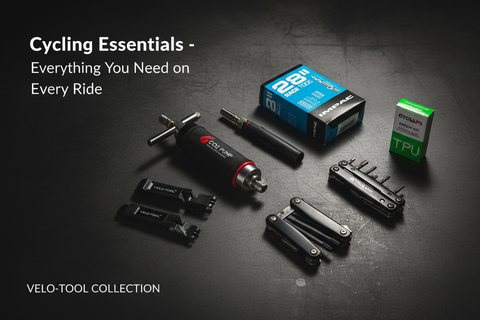

CO2 Inflator Quick Start Guide
Master fast, efficient roadside inflation with CO2 inflators. This guide covers proper technique, safety tips, and best practices for using CO2 cartridges to get you back on the road quickly.
Our CO2 Inflator Range
Professional CO2 Inflator with Frame Bracket
Premium CNC aluminum inflator with frame mounting bracket. Precision-threaded for reliable cartridge connection and controlled inflation.
Professional Mini CO2 Pump
Ultra-compact 30g aluminum inflator - the lightest option for weight-conscious riders. Fits easily in jersey pockets.
CO2 Pump Bundle with 5 Cartridges
Complete kit with professional inflator plus five 16g threaded cartridges. Everything you need for multiple repairs.
What You'll Need
- CO2 inflator (threaded or push-on style)
- 16g Threaded CO2 Cartridges (road) or 20-25g (MTB)
- Protective sleeve or cloth (prevents cold burns)
- Tire levers (for tire removal if needed)
- Spare tube or tubeless repair plugs
Step-by-Step CO2 Inflation
1. Prepare the Tire
- Remove wheel from bike
- If repairing puncture, remove tire and fix or replace tube
- For tubeless, insert repair plug if needed
- Ensure tire bead is properly seated in rim
- Check valve is straight and secure
2. Attach CO2 Inflator
For Threaded Cartridges:
- Thread cartridge into inflator body (do not overtighten)
- Ensure cartridge is secure but not pierced yet
- Attach inflator head to valve (Presta or Schrader)
- Ensure tight seal - no air should escape
For Push-On Cartridges:
- Attach inflator to valve first
- Insert cartridge into inflator sleeve
- Push cartridge to pierce and begin inflation
3. Inflate the Tire
- Control the Flow: Slowly turn the inflator control knob or trigger
- Monitor Pressure: Feel tire firmness as it inflates
- Protect Your Hands: Cartridge gets extremely cold - use protective sleeve
- Full Inflation: One 16g cartridge typically inflates road tire to 80-100 PSI
- Stop When Full: Close valve or remove inflator when desired pressure reached
4. Remove Inflator and Check
- Unscrew inflator from valve (threaded) or pull off (push-on)
- Close Presta valve if applicable
- Check tire pressure by feel or with gauge
- Spin wheel to ensure tire is seated evenly
- Reinstall wheel on bike
CO2 Cartridge Sizing Guide
| Tire Type | Cartridge Size | Typical Pressure |
|---|---|---|
| Road (700x23-25c) | 16g | 90-110 PSI |
| Road (700x28-32c) | 16g or 20g | 70-90 PSI |
| Gravel (700x35-45c) | 20g or 25g | 40-60 PSI |
| MTB (29x2.0-2.4) | 25g | 25-35 PSI |
Pro Tips for CO2 Use
Temperature Management
- Cartridge Gets Cold: CO2 expansion causes extreme cold - always use protective sleeve
- Warm Weather: CO2 expands in heat - check pressure after tire warms up
- Cold Weather: CO2 contracts in cold - may need slight top-up after warming
Inflation Control
- Slow Release: Control inflation speed to avoid over-inflation
- Listen for Leaks: Hissing sound means poor seal - reposition inflator
- One Shot: Once cartridge is pierced, use all the gas - cannot be resealed
- Practice at Home: Try CO2 inflation before you need it on the road
Pressure Considerations
- Ride Pressure: CO2 gives enough pressure to ride home safely
- Top Up Later: Replace CO2 with regular air within 24 hours (CO2 permeates faster)
- Tubeless Seating: CO2 works great for seating stubborn tubeless beads
CO2 vs Hand Pump - When to Use Each
Use CO2 When:
- Racing or group rides (speed is critical)
- Cold weather (hand pumping is difficult)
- Seating tubeless tires (need burst of high pressure)
- Multiple punctures possible (carry 2-3 cartridges)
- Minimizing weight and bulk
Use Hand Pump When:
- Long tours or bikepacking (unlimited inflation)
- Precise pressure control needed
- Practicing or testing repairs
- Budget-conscious (no consumable cost)
- Environmental concerns (no cartridge waste)
Safety and Best Practices
Safety Guidelines
- Never Over-Inflate: Monitor tire pressure carefully
- Protect Skin: Cartridge can cause cold burns - use sleeve or cloth
- Check Valve: Ensure valve core is tight before inflation
- Proper Storage: Keep cartridges dry and at room temperature
- Dispose Properly: Recycle empty cartridges where facilities available
Common Mistakes to Avoid
- Threading cartridge too tight (can pierce prematurely)
- Not checking valve seal (wastes CO2)
- Inflating too quickly (can damage tube or tire)
- Touching cold cartridge with bare hands
- Forgetting to close Presta valve before removing inflator
Troubleshooting
CO2 Leaking from Inflator: Check valve seal, ensure inflator is properly threaded
Tire Won't Inflate: Verify cartridge is pierced, check for punctures in tube
Over-Inflated: Release some air through valve, check pressure with gauge
Cartridge Freezing to Inflator: Normal - wait a moment, use cloth to separate
Tire Loses Pressure Quickly: CO2 permeates rubber - top up with regular air within 24 hours
What to Carry
Minimal Setup (Road Racing)
- 1x CO2 inflator
- 2x 16g Cartridges
- 1x Spare Tubes
- Tyre Levers
Standard Setup (Training/Commuting)
- 1x CO2 inflator
- 2-3x Cartridges
- 1x Spare Tubes
- Multi Tool
- Tyre Levers
-
1x Patch kit
Extended Setup (Touring/Gravel)
- 1x CO2 inflator
- 3-4x Cartridges
- 1x Mini Hand Pump (backup)
- 2x Spare Tubes
- 1x Patch kit
- Tubeless Plugs
- Multi-Tool
- Tyre levers
Shop Our CO2 Inflation Systems
Equip yourself with professional CO2 inflation tools for fast, reliable roadside repairs.
Looking for complete emergency kits? Check our Essential Tool Cases User Guide or browse our Installation Guides & Tutorials.