
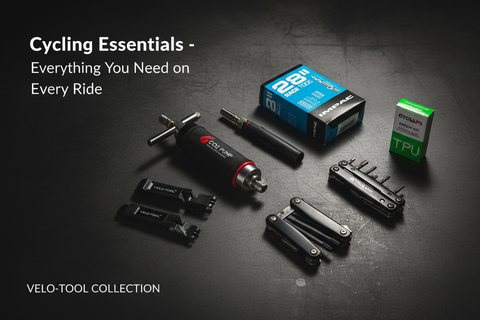

CO2 Inflator Guide - How to Use & Mount Your System
Master the art of fast, efficient roadside inflation with our comprehensive CO2 inflator guide. Whether you're new to CO2 systems or looking to refine your technique, this guide covers everything you need to know.
How to Use a CO2 Inflator
What you'll need:
- CO2 inflator (threaded or push-on style)
- CO2 cartridge (16g for road tyres, 25g for MTB/gravel)
- Tyre with Presta or Schrader valve
Step-by-Step Instructions
- Prepare the valve - Remove the valve cap and ensure the valve core is tight (use a valve core tool if needed). For Presta valves, unscrew the valve tip completely by turning it counter-clockwise until it stops.
- Inspect the tyre - Before inflating, check that there are no punctures, cuts, or debris embedded in the tyre. Ensure the tyre bead is seated properly in the rim channel on both sides.
- Attach the inflator head - For threaded inflators, screw the head onto the valve carefully—don't cross-thread. For push-on inflators, press firmly onto the valve and flip the locking lever. Ensure a tight seal to prevent gas leakage.
- Install the CO2 cartridge - Screw the CO2 cartridge into the inflator body. Turn it hand-tight only—over-tightening can damage the seal. Some inflators require you to pierce the cartridge by screwing it in fully.
- Release the CO2 - Depending on your inflator model, either twist the cartridge, press a trigger, or flip a lever to release gas into the tyre. Warning: The cartridge will become extremely cold during discharge—avoid direct skin contact or use the included insulating sleeve.
- Monitor pressure - Release gas in controlled bursts rather than all at once. Feel the tyre firmness as you inflate. A 16g cartridge typically inflates a road tyre (700x25c) to approximately 100 PSI. A 25g cartridge is suitable for larger tyres or higher pressures.
- Remove the inflator - Once the tyre reaches desired pressure, quickly unscrew or release the inflator head from the valve. For Presta valves, immediately screw down the valve tip to prevent air loss.
- Replace the valve cap - Always replace the valve cap to keep dirt and debris out of the valve mechanism.
- Verify pressure - If possible, use a pressure gauge to check the exact pressure. Adjust if needed using a hand pump—CO2 inflation can be imprecise.
Pro Tips for Perfect CO2 Inflation
- Practice at home first - Before relying on CO2 during a ride, practice the entire process at home. This builds muscle memory and confidence for roadside repairs.
- One cartridge = one inflation - CO2 cartridges are single-use. Always carry at least one spare cartridge on rides.
- CO2 leaks faster than air - CO2 molecules are smaller than nitrogen/oxygen and permeate through tyre rubber faster. Top up with regular air from a hand pump within 24 hours to maintain pressure.
- Cold weather considerations - In temperatures below 5°C, CO2 cartridges may not fully inflate tyres due to reduced gas expansion. Carry a backup hand pump in winter.
- Check compatibility - Ensure your inflator works with both Presta and Schrader valves, or carry the appropriate adapter.
- Insulate your hands - Use the cartridge sleeve, a glove, or a rag to hold the cartridge during inflation—it gets cold enough to cause frostbite.
- Don't over-inflate - It's easy to over-inflate with CO2. Release gas in short bursts and check pressure frequently.
Troubleshooting Common Issues
Problem: Gas leaking from the inflator head
- Solution: Ensure the inflator is screwed on tightly to the valve. Check that the valve core is tight. Replace worn O-rings in the inflator head.
Problem: Cartridge won't pierce
- Solution: Screw the cartridge in more firmly (but don't force it). Check that the piercing pin isn't damaged or bent.
Problem: Tyre won't inflate
- Solution: Check for punctures or cuts in the tyre. Ensure the tyre bead is seated on the rim. Verify the valve core is open (Presta valves).
Problem: Cartridge freezes to inflator
- Solution: This is normal. Wait 30 seconds for it to warm up, then unscrew. Don't force it while frozen.
Mounting Your CO2 System
Proper mounting keeps your CO2 system accessible, secure, and protected from the elements. Here are the best mounting positions and installation techniques.
Best Mounting Positions
1. Under the Saddle (Most Popular)
- Advantages: Aerodynamic, doesn't interfere with frame bags or bottles, easy to access while standing over the bike
- Best for: Road bikes, gravel bikes, XC mountain bikes
- Installation: Use the integrated bracket to mount the inflator and cartridge holder beneath your saddle rails. Position it centrally for balance.
2. Inside the Frame Triangle
- Advantages: Protected from road spray and impacts, low center of gravity, doesn't affect aerodynamics
- Best for: Mountain bikes, bikes with dropper posts (where saddle mounting isn't ideal)
- Installation: Mount to bottle cage bosses using the included bolts, or use Velcro straps on the down tube or seat tube.
3. Top Tube or Down Tube
- Advantages: Quick access without dismounting, visible for easy checks
- Best for: Enduro/trail bikes, bikepacking setups
- Installation: Use adhesive mounts or heavy-duty Velcro straps. Ensure it doesn't interfere with knee clearance.
Installation Steps
- Clean the mounting surface - Wipe the frame area with isopropyl alcohol to remove dirt, grease, and oils. Let it dry completely (2-3 minutes).
- Test fit the bracket - Position the bracket without removing adhesive backing or tightening bolts. Ensure it doesn't interfere with cables, bottle cages, or your riding position.
- Mark mounting holes - If using bolt-on mounts, use a pencil to mark the hole positions through the bracket.
- Secure the bracket - For bolt-on: Thread bolts through the bracket and into frame bosses, tightening to 3-4Nm. For adhesive: Remove backing and press firmly for 30 seconds. For Velcro: Wrap tightly and secure.
- Load the inflator and cartridge - Insert the CO2 inflator into the bracket's main holder. Place cartridges in the cartridge holder slots.
- Test security - Gently pull on the bracket and shake the bike. Nothing should move or rattle. If using adhesive, wait 24 hours before riding for full bond strength.
Mounting Pro Tips
- Accessibility matters - Mount the system where you can reach it easily while standing over the bike. You don't want to fumble during a roadside repair.
- Protect from elements - If mounting externally, consider a protective sleeve or bag to keep the inflator clean and dry.
- Check regularly - Inspect mounting bolts or adhesive every few weeks. Vibration can loosen bolts over time.
- Balance your load - If mounting under the saddle, center the system to avoid affecting bike handling.
- Consider your riding style - Aggressive mountain bikers should avoid saddle mounts (dropper post interference) and opt for frame triangle mounting.
Choosing the Right CO2 Cartridge Size
16g Cartridges
- Best for: Road tyres (700x23c to 700x28c)
- Inflates to: ~100-120 PSI
- Weight: Lighter, more compact
- Recommendation: Carry 2 cartridges for road rides
25g Cartridges
- Best for: Gravel tyres (700x32c to 700x45c), MTB tyres (2.0" to 2.5")
- Inflates to: ~30-50 PSI (MTB), ~60-80 PSI (gravel)
- Weight: Heavier but more versatile
- Recommendation: Carry 1-2 cartridges for gravel/MTB rides
Threaded vs. Non-Threaded
- Threaded cartridges: Standard, compatible with most inflators, more secure connection
- Non-threaded (push-on): Faster to use but less common, requires specific inflators
Maintenance & Care
Inflator Maintenance
- Wipe clean after each use to remove dirt and moisture
- Check threads for damage or cross-threading every few months
- Inspect O-rings annually—replace if cracked or worn (available in our repair kits)
- Store in a dry place to prevent corrosion
- Lubricate threads lightly with silicone grease once per year
Cartridge Storage
- Store in a cool, dry place away from direct sunlight
- Check expiration dates—cartridges don't expire but can corrode over time
- Inspect for rust or damage before each ride
- Don't store cartridges in extreme heat (car dashboards, direct sun)
- Keep spares in your saddle bag or frame bag
Recommended Products
Explore our range of professional CO2 inflation systems:
- Executive CO2 Inflation System - Carbon look case with CNC aluminum pump for premium performance
- Executive Rapid Inflation System - Complete kit with integrated mounting bracket
- Professional Emergency Response System - All-in-one roadside repair solution with CO2 inflator
Need More Help?
Still have questions about CO2 inflators? Contact our expert support team for personalized guidance. We're here to ensure you get the most from your VELO-TOOL products.