
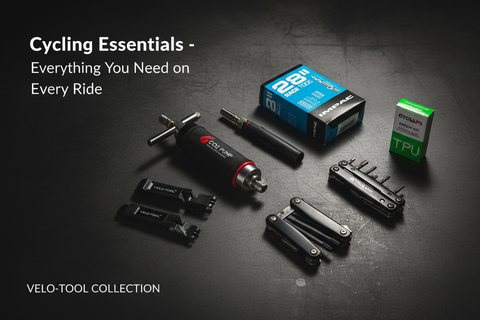

Chain Maintenance Guide - Cleaning, Tools & Wear Assessment
Master professional chain maintenance with our comprehensive guide. Learn how to clean, assess wear, use chain tools, and extend your drivetrain's lifespan with proper care techniques.
Why Chain Maintenance Matters
Your chain is the hardest-working component on your bike. Proper maintenance:
- Extends drivetrain life by 2-3x - A clean chain lasts 3,000-5,000km vs 1,000-2,000km for a neglected chain
- Improves shifting performance - Clean chains shift smoothly and precisely
- Saves money - Replacing a worn chain costs £20-40. Replacing a worn cassette and chainrings costs £100-300
- Increases efficiency - A clean drivetrain wastes less energy, making you faster
- Reduces noise - Eliminate squeaks, creaks, and grinding sounds
Professional Chain Cleaning Guide
What You'll Need
- Professional Eco-Friendly Degreaser (500ml)
- Chain cleaning brush or old toothbrush
- Clean rags (microfiber preferred)
- Chain lubricant (wet or dry formula)
- Work stand or way to elevate the bike
- Optional: Chain cleaning device
Deep Cleaning Method (Every 200-300km)
- Position the bike - Use a work stand or flip the bike upside down. You need access to the entire drivetrain.
- Shift to smallest cogs - Shift the chain to the smallest chainring and smallest rear cog. This creates maximum chain slack and exposes more chain surface.
- Apply degreaser - Spray Professional Eco-Friendly Degreaser liberally onto the chain, cassette, and chainrings. Focus on the chain rollers, side plates, and between the cassette cogs. Let it soak for 2-3 minutes to break down grime.
- Scrub the chain - Use a stiff-bristled brush to scrub each section of chain. Hold the brush against the chain and rotate the cranks backward slowly. Scrub the top, bottom, and sides of the chain. Pay special attention to the rollers (the parts that contact the cassette teeth).
- Clean between chain links - Use a narrow brush or old toothbrush to get between the inner and outer plates where dirt accumulates.
- Clean the cassette - Use a narrow brush or rag to clean between each cassette cog. Wrap a rag around a flat-head screwdriver or use a specialized cassette brush. Remove all built-up grime from the teeth and spaces.
- Clean the chainrings - Scrub both sides of each chainring with the brush. Don't forget the back side where dirt hides.
- Clean the derailleur pulleys - The rear derailleur has two small pulleys (jockey wheels). Scrub them thoroughly—they accumulate massive amounts of grime.
- Rinse or wipe - Our Professional Eco-Friendly Degreaser is biodegradable and can be wiped off with a damp cloth. For heavy buildup, you can rinse with water, but avoid high-pressure washers near bearings.
- Dry thoroughly - Use clean, dry rags to wipe the chain, cassette, and chainrings completely dry. Any remaining moisture will dilute your lubricant.
- Inspect for wear - While the chain is clean, check for stiff links, rust, or damage. Flex the chain side-to-side—it should move freely.
- Lubricate - Apply chain lubricant to each roller while rotating the cranks backward. Apply to the inside of the chain (the side facing the cassette). Wipe off excess lubricant with a clean rag—too much attracts dirt.
- Let it settle - Wait 5-10 minutes for the lubricant to penetrate the chain rollers before riding.
- Test shifting - Shift through all gears to distribute lubricant and verify smooth operation.
Quick Maintenance (After Every Wet/Muddy Ride)
- Wipe the chain with a rag immediately after riding
- Apply degreaser to a rag and run the chain through it while rotating the cranks
- Wipe dry with a clean rag
- Re-lubricate lightly
- Wipe off excess
Time required: 5 minutes
Chain Cleaning Pro Tips
- Clean every 200-300km - More often in wet, muddy, or dusty conditions
- Don't use dish soap - It's not strong enough to cut through chain grease and can leave residue
- Avoid WD-40 as a cleaner - It's a water displacer, not a degreaser, and will leave a film that attracts dirt
- A clean drivetrain lasts 2-3x longer - The investment in cleaning products pays for itself many times over
- Our 500ml Professional Eco-Friendly Degreaser - Biodegradable, safe for all bike finishes, and lasts 20-30 deep cleans
- Clean before lubricating - Never apply lube to a dirty chain—you'll just seal in the grit
Using a Chain Tool
Chain tools are essential for removing, installing, and repairing chains. Master this skill for roadside repairs and maintenance.
What You'll Need
- Chain tool (included in multi-tools or standalone)
- Replacement quick link (master link)
- Clean rag
- Optional: Quick link pliers
Understanding Chain Construction
Modern bike chains consist of:
- Inner plates - Narrower plates with holes for pins
- Outer plates - Wider plates that overlap inner plates
- Pins (rivets) - Hold the plates together and allow rotation
- Rollers - Cylindrical pieces that contact cassette/chainring teeth
- Quick link - Special removable link for easy chain removal (most modern chains)
Removing a Chain with Quick Link
Identifying the quick link: Look for two symmetrical plates that differ from regular links. They're usually a different color (silver on a black chain) or have distinctive markings.
- Locate the quick link - Rotate the chain until you find it. Most chains have one quick link.
- Position for access - Move the quick link to the top of the chain, between the chainrings and cassette, for easy access.
- Release the quick link - Method 1 (with quick link pliers): Squeeze the two plates together with quick link pliers, then slide them apart. Method 2 (without pliers): Use the "crossed screwdrivers" method—insert two flat-head screwdrivers between the chain and quick link plates, then squeeze them together while pulling the chain apart.
- Separate the chain - Once the quick link is released, the chain will come apart easily.
Removing a Chain with Chain Tool (No Quick Link)
- Select a pin to remove - Choose any pin except the quick link (if present). Avoid pins near the derailleur—they're harder to access.
- Position the chain in the tool - Place the chain in the outer slot of the chain tool (the slot closer to the edge). Align the pin you want to remove with the driving pin of the tool.
- Drive the pin out - Turn the handle clockwise to push the pin through the chain. Critical: Don't push the pin all the way out—leave about 1mm attached to the outer plate. If you push it completely out, it's nearly impossible to reinstall.
- Check progress - Stop frequently to check. The pin should be almost flush with the outer plate but still attached.
- Separate the chain - Flex the chain at the partially removed pin to separate the links.
Installing a Chain with Quick Link
- Thread the chain - Route the chain through the rear derailleur (around both pulleys), over the cassette, and through the front derailleur. Ensure it follows the correct path.
- Connect the chain ends - Bring the two chain ends together. Insert the quick link pins into the chain ends from opposite sides.
- Snap the quick link together - Pull the chain ends apart while the quick link is engaged. You'll feel/hear it snap into place.
- Verify connection - The quick link should be fully seated with no gap between the plates.
- Test - Rotate the cranks and shift through gears to verify the connection is secure.
Important: Quick links are single-use. Always replace with a new quick link when removing a chain.
Installing a Chain with Chain Tool
- Thread the chain - Route through the drivetrain as above.
- Align the chain ends - Bring the inner and outer plates together, aligning the holes.
- Position in the tool - Place the chain in the inner slot of the chain tool (closer to the center). Align the partially removed pin with the driving pin.
- Push the pin back through - Turn the handle clockwise to drive the pin back through the chain. Push until the pin is flush on both sides of the outer plates.
- Check for stiff link - Flex the chain at the repaired link. If it's stiff (doesn't bend freely), you need to loosen it.
- Loosen a stiff link - Place the chain in the outer slot (perpendicular to how you installed it) and give the handle a tiny turn (1/8 turn). This spreads the plates slightly. Flex the chain laterally (side-to-side) to free the link.
- Verify smooth operation - The repaired link should flex as freely as the rest of the chain.
Chain Tool Pro Tips
- Practice at home first - Don't learn on the roadside. Practice on an old chain.
- Never push a pin completely out - It's nearly impossible to reinstall. Leave 1mm attached.
- Quick links are easier - If your chain doesn't have one, add one for future convenience.
- Carry a spare quick link - Essential for roadside repairs. They weigh almost nothing.
- Count your links - Before removing a chain, count the links so you reinstall the correct length.
- Multi-tools include chain tools - Our Professional 23-Function Multi-Tool includes a chain tool for roadside repairs.
Chain Wear Assessment
Chains stretch over time due to pin and roller wear. A worn chain accelerates cassette and chainring wear, costing far more than a new chain.
What You'll Need
- Chain wear indicator tool (recommended)
- Or: 12-inch ruler
Using a Chain Wear Tool
- Clean the chain first - Dirt and grime give false readings. Wipe the chain clean.
- Position the tool - Place the chain wear indicator into the chain with the chain under slight tension (shift to the largest chainring).
- Check the 0.5% side - Try to insert the 0.5% end of the tool into the chain. If it drops fully into the chain, the chain has 0.5% wear.
- Check the 0.75% or 1.0% side - If the 0.75% or 1.0% end drops fully into the chain, the chain is worn beyond acceptable limits and must be replaced immediately.
Using a Ruler (12-Inch Method)
- Clean the chain - Wipe clean for accurate measurement.
- Position the ruler - Place the 0" mark of a 12-inch ruler on a rivet pin. Ensure the ruler is aligned with the chain.
-
Check the 12" mark - Look at where the 12" mark falls:
- Exactly on a rivet pin: Chain is new or minimally worn (0% wear)
- 1/16" past a rivet pin: Chain has 0.5% wear (replace for road bikes)
- 1/8" past a rivet pin: Chain has 1.0% wear (replace immediately for all bikes)
When to Replace Your Chain
Road bikes: Replace at 0.5% wear (approximately 3,000-5,000km)
- Road bikes use higher chain tension and smaller cogs, which accelerate cassette wear
- Replacing at 0.5% protects your expensive 11-speed or 12-speed cassette
Mountain bikes: Replace at 0.75% wear (approximately 2,000-4,000km)
- MTB drivetrains are more tolerant due to lower chain tension and larger cogs
- Replacing at 0.75% balances chain and cassette lifespan
Consequences of delaying replacement:
- A worn chain wears cassette teeth into a "shark tooth" profile
- Once the cassette is worn, a new chain will skip under load
- You'll need to replace both chain and cassette (£100-300 vs £20-40 for just a chain)
- Worn chainrings also need replacement, adding another £50-150
Chain Wear Pro Tips
- Check wear every 500km - Takes 30 seconds and prevents expensive surprises
- Replace chains proactively - Don't wait for skipping or poor shifting
- Rotate multiple chains - Some riders use 2-3 chains in rotation, swapping every 500km. This distributes wear across chains and cassette, extending total drivetrain life.
- Keep records - Note when you install a new chain and track mileage
- Clean chains last longer - A clean chain can last 5,000km; a dirty chain may only last 1,000km
Chain Lubrication Guide
Choosing the Right Lubricant
Wet lubricant:
- Best for: Wet weather, winter riding, commuting in rain
- Pros: Long-lasting, waterproof, excellent protection
- Cons: Attracts dirt in dry conditions, requires more frequent cleaning
Dry lubricant:
- Best for: Dry weather, summer riding, dusty conditions
- Pros: Doesn't attract dirt, cleaner drivetrain
- Cons: Washes off in rain, needs more frequent application
Wax-based lubricant:
- Best for: Dry conditions, road racing, maximum efficiency
- Pros: Extremely clean, most efficient, longest-lasting in dry conditions
- Cons: Requires complete chain cleaning before application, not waterproof
How to Lubricate a Chain
- Start with a clean, dry chain - Never apply lube to a dirty chain
- Position the bike - Elevate the rear wheel so you can rotate the cranks freely
- Apply lubricant to each roller - Hold the lube bottle tip against the inside of the chain (the side facing the cassette). Rotate the cranks backward slowly, applying one drop per roller. Don't over-apply—more is not better.
- Complete one full rotation - Apply lube to every link. You'll know you've done a full rotation when you reach the starting point again.
- Let it penetrate - Wait 5-10 minutes for the lubricant to work into the rollers and pins.
- Wipe off excess - Use a clean rag to wipe the outside of the chain. Excess lube on the surface attracts dirt. Only the lube inside the rollers matters.
- Test shifting - Shift through all gears to distribute lubricant evenly.
Lubrication Schedule
- After every wash: Always lubricate after cleaning
- Every 200-300km: In dry conditions
- Every 100-150km: In wet conditions
- After every wet ride: Rain washes away lubricant
- Before long rides: Ensure adequate lubrication for reliability
Recommended Products
Explore our professional chain maintenance solutions:
- Professional Eco-Friendly Degreaser - 500ml premium chain cleaner, biodegradable
- Chain Maintenance Essentials - Complete drivetrain care bundle
- Professional 23-Function Multi-Tool - Includes chain tool for roadside repairs
Need More Help?
Still have questions about chain maintenance? Contact our expert support team for personalized guidance. We're here to ensure you get the most from your VELO-TOOL products.